Skip to content
Hyderabad, Telangana, 500024

Business hours

Advocate Syed Hashim Adil & Associates Law Firm

Monday
9am-11pm
Tuesday
9am-11pm
Wednesday
9am-11pm
Thursday
9am-11pm
Friday
9am-11pm
Saturday
9am-11pm
Sunday
9am-8pm

You can anytime during the day with your query.

+919966881255

Latest Posts & Updates

Fresh stories, announcements and offers about Divorce Lawyer, Law firm, Consultant, straight from our business.

Muslim Women has equal Right to demand divorce and husband’s consent is not essential: Kerala Hi…

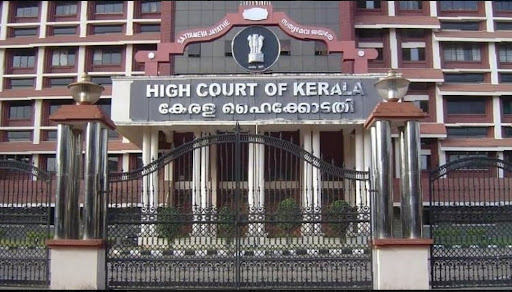
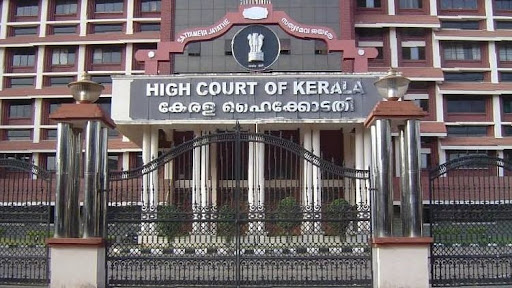
Muslim Women has equal Right to demand divorce and husband’s consent is not essential: Kerala High Court The division bench of Justice A. Muhamed Mustaque and Justice C. S. Dias dismissed a review petition against a judgement in which the court recognised a Muslim woman’s right to use Khula, saying: “In the absence of any mechanism in the country to recognise marriage termination at the wife’s request when the husband refuses to give consent, the court can simply hold that khula can be invoked without the husband’s participation.”  The court ruled that a Muslim wife’s right to divorce at the request of her husband is an absolute right granted to her by the Holy Quran and is not subject to her husband’s acceptance or will.  The Kerala High Court ruled that Islamic law recognises a Muslim woman’s right to demand divorce irrespective of consent of husband. The court said that this is a typical review in which Muslim women are portrayed as subservient to the will of their male counterparts. The court stated that a Khula is valid if following conditions are met. i. The wife’s declaration of repudiation or termination of the marriage. ii. An offer to return her dower or any other material gain received during her marriage.  iii.Before the declaration of khula, an effective attempt at reconciliation was made.
Muslim Women has equal  Right to demand divorce and husband’s consent is not essential: Kerala Hi… post imageRead full post

Husband liable for sex with minor Muslim wife ; POCSO Act overrides Muslim personal law : Karnata…

Husband liable for sex with minor Muslim wife ; POCSO Act overrides Muslim personal law : Karnataka HC Karnataka High Court recently held that the Protection of Children from Sexual Offences (POCSO) Act overrides Muslim personal law with respect to the age of consent for sex and hence, sex after marriage with minor Muslim girl would not be exempted from POCSO. "Such arguments cannot be accepted in view of the fact that POCSO Act is a Special Act and it over rights personal law and under POCSO Act, the age for involving in sexual activities is 18 years (sic)," the Court held. The Court also opined that the minor girl was capable of understanding the consequences of her decisions. It further said that even though the girl said she had objected to the solemnisation of her marriage, there was no prima facie evidence to show that the marriage was without her consent. The Court rejected the argument that under Muslim law, a minor girl can marry once she attains 15 years and no offence under POCSO Act would be made out against husband if such minor Muslim wife becomes pregnant.

Husband liable for sex with minor Muslim wife ; POCSO Act overrides Muslim personal law : Karnata… post imageRead full post

Advocate Indira Jaising submits in Supreme Court on irretrievably break down of marriage : Right…

Advocate Indira Jaising submits in Supreme Court on irretrievably break down of marriage : Right to Enter & Exit a marriage is a fundamental right "Right to marry is a fundamental right because it is a part of the right to form affiliations. It can be extended to the right to exit the affiliation. Unreasonable restrictions can be a ground to call into question a law", she argued. Advocate argued that the right to the right to exit the union is an extension to right to enter a marriage and would be covered under the right to form associations under Article 19(1)(c) read with the Right to Life and Liberty under Article 21 of the Constitution. " that the right to enter a marriage and exit one are fundamental rights. There are systems of law where people can get unilateral divorces. Here, there is an intermediary, that is, the court. So we have to figure out the role of the court." Clarifying her objective, she said she is set to first distill the essential components of an ideal marriage, and then determine how to dissolve a marriage that lacked those fundamental elements. Her primary objective in the matter, she stated is to maximise the welfare of the stakeholders, particularly the women and the children.

Advocate Indira Jaising submits in Supreme Court on irretrievably break down of marriage : Right… post imageRead full post

The Madras High Court observed that couples who tie the marital knot, must remember that marriage…

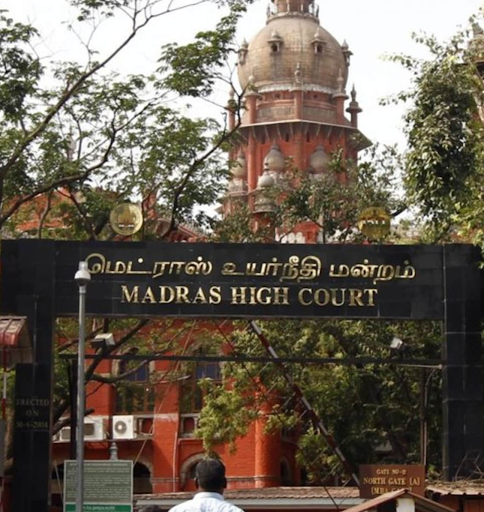
The Madras High Court observed that couples who tie the marital knot, must remember that marriage is not merely for carnal pleasure but its main purpose is to procreate. Single-judge Justice Krishnan Ramasamy said that estranged couples litigating over custody of their minor children should know that such disputes make the children, brought into "this vicious world through the act of two individuals for their pleasure," suffer. "This Court would like to stress and impress upon the persons, who have tied the marital knot that the concept of marriage is not for mere carnal pleasure, but it is mainly for the purpose of progenating (sic) , which leads to the extension of the familial chain. The child born out of the said wedlock is the connecting link between the two individuals, who have been united over a sacred oath, taken by both. Any act in contravention of the oath on the touchstone of law is nothing but an act with which the hands of the binder of the link is severed." Law can satisfy the ego, but it can never the satisfy the requirements of the child, as the framers of the law were only conscious of the welfare of the child and not on the mental turmoil that would be faced by a child in such a calamitous situation," Court said.

The Madras High Court observed that couples who tie the marital knot, must remember that marriage… post imageRead full post

Restitution of Conjugal Rights aimed at preserving marriage and not merely voluntary sexual inter…

Restitution of Conjugal Rights aimed at preserving marriage and not merely voluntary sexual intercourse: Central government to Supreme Court Restitution of Conjugal Rights aimed at preserving marriage and not merely voluntary sexual intercourse: Central government to Supreme Court In an affidavit filed before the Supreme Court of India, the government submitted that "Matrimony essentially entails a voluntary expression of spouses to cohabit and have a home and family together. Voluntary sexual intercourse in integral part of the marriage." Section 9 states: “When either the husband or the wife has, without reasonable excuse, withdrawn from the society of the other, the aggrieved party may apply, by petition to the district court, for restitution of conjugal rights and the court, on being satisfied of the truth of the statements made in such petition and that there is no legal ground why the application should not be granted, may decree restitution of conjugal rights accordingly.” A similar provision can be found in Section 22 of the Special Marriage Act. The petitioners prayed that Section 9 of the Hindu Marriage Act and Section 22 of the Special Marriage Act be struck down. Additionally, the enforcement of restitution of conjugal rights as provided for under Order XXI Rule 32 and 33 of the Code of Civil Procedure was also sought to be struck down.

Restitution of Conjugal Rights aimed at preserving marriage and not merely voluntary sexual inter… post imageRead full post

*The Kerala High Court has ruled that a Magistrate is empowered to decide the pela of talaq raise…

*The Kerala High Court has ruled that a Magistrate is empowered to decide the pela of talaq raised by the husband in his wife's petition filed under the Domestic Violence Act if he disputes their marital status on that ground.* Justice Kauser Edappagath thereby allowed a criminal revision petition holding that the finding of the appellate court that the Magistrate has no power to decide the validity of the talaq is wrong and only to be set aside. "In a petition filed by the wife under the DV Act, if the husband disputes the marital status on the ground that he has divorced the wife by the pronouncement of talaq, the Magistrate has every power to decide whether the said plea is valid or not. "

*The Kerala High Court has ruled that a Magistrate is empowered to decide the pela of talaq raise… post imageRead full post

First cousin brother on mother's side not entitled to share in deceased uncle's property

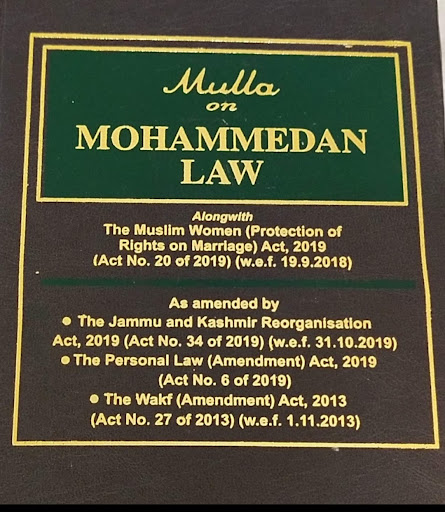
It was the case of the woman that her father Alisab Dubalesab Kadampur was the owner and in possession of the suit schedule properties. He was in lawful possession along with plaintiff and her husband Maktumsab. She also claimed that she is the only daughter and her father had performed her marriage assuring that the property will devolve upon her. Even otherwise, she claimed she succeeded to the suit property by inheritance. It was pleaded that the defendants are the sons of her mother's elder sister Davalbi and in order to grab the suit schedule properties, they indulged in creating forged and bogus documents such as Will etc., on the pretext that their deceased uncle had executed such documents in their favour. The appellants herein claimed that their father and deceased Alisab were cousins. Thus, they claimed to be residuaries under the Mohammedan law. They submitted that the original-plaintiff is entitled for 1/2 share and remaining property goes to the residuaries. "It is clear that defendants' father is not real brother of the plaintiff's father but only admitted relationship is that the plaintiff and defendants are cousins since the plaintiff's mother and defendants' mother are sisters and hence the very contention of the plaintiff's counsel that the defendants come within Section 65 of the Mohammedan Law cannot be accepted and they cannot claim as residuaries." Karnataka HC

First cousin brother on mother's side not entitled to share in deceased uncle's property  post imageRead full post

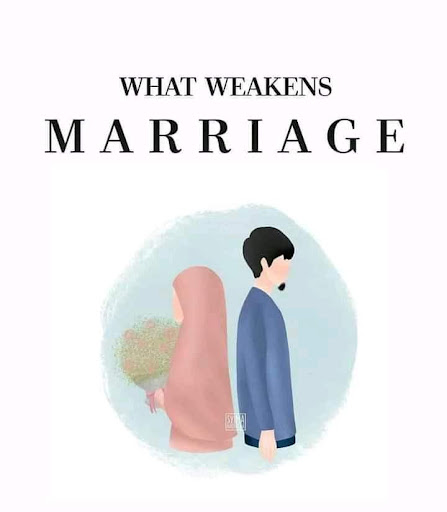
WHAT WEAKENS MARRIAGE

1. MISBEHAVING: Saying bad or hateful things, making bad jokes and insulting each other. 2. IGNORE Not replying back to the "salams" or giving each other the good ear to listen and share.3. 3. LYING Allah forbids the believers to lie. There is no room in Islam for liars, and may Allah save us from this evil, ameen. 4. BREAKING PROMISES Keeping a trust is also an important characteristic of a believer. 5. AVOIDING INTIMACY You hug the brothers at the mosque, but what about a "little hug" with your wife? Come on, you can do it. 6. SUSPICION & BACKBITING Allah says, "O believers, avoid much suspicion. Certainly suspicion is sinful. And don't spy or backbite each other. Would any of you like to eat the flesh of your dead brother. You would hate it. Fear Allah's punishment. For sure Allah is the Acceptor of repentance, The Merciful." [Quran 49: 12] 7. TOO BUSY Take time for each other. You have rights on each other. Give everyone their rights and you will be given your rights. 8. NOT PRAYING Allah will never be pleased with someone who leaves His guidance and does not worship Him. This will cause Muslim families serious problems and even to split up, faster than anything!

WHAT WEAKENS MARRIAGE post imageRead full post

*The Delhi High Court has observed that no arrest should be made merely for the reason that that…

*The Delhi High Court has observed that no arrest should be made merely for the reason that that it is lawful, thereby adding that the police officer has to justify the arrest apart from his power to do so.* Referring to the Supreme Court judgment in Satendar Kumar v. CBI which has discussed compliances of sec. 41 and 41A of the Code of Criminal Procedure, 1943, Justice Anu Malhotra was of the view that the said provisions have to be adhered to by the Investigating Agency in the event the police officer considers it essential to arrest the accused persons. "It is essential to observe that the said provisions come into play at the time of arrest of a person and the requirement of calling upon a person to appear before the police officer on his having credible information or where there is a reasonable suspicion of that person having committed a cognizable offence," the Court said. It added, "This is so as no arrest should be made because it is lawful for the police officer to do so as the police officer has to justify to the arrest apart from his power to do so as laid down in Siddharam Satlingappa Mhetre."

*The Delhi High Court has observed that no arrest should be made merely for the reason that that… post imageRead full post

For any legal information on Civil cases, Bails in Criminal Cases, NRI Cases, Marital Disputes, D…

For any legal information on Civil cases, Bails in Criminal Cases, NRI Cases, Marital Disputes, Domestic Violence, Money Disputes, Divorce Issues, Real Estate, Child Custody, Criminal Matter, Khula, Alimony, Property Matters, Child Custody, Legal Notice, Ask your legal query online and get answered from the law firm. Want to talk to Advocate Syed Hashim Adil on call, book an appointment now. What'sapp on +91 9700 000531

For any legal information on Civil cases, Bails in Criminal Cases, NRI Cases, Marital Disputes, D… post imageRead full post